
Skills Assessments for Manufacturing Teams: A Complete Guide
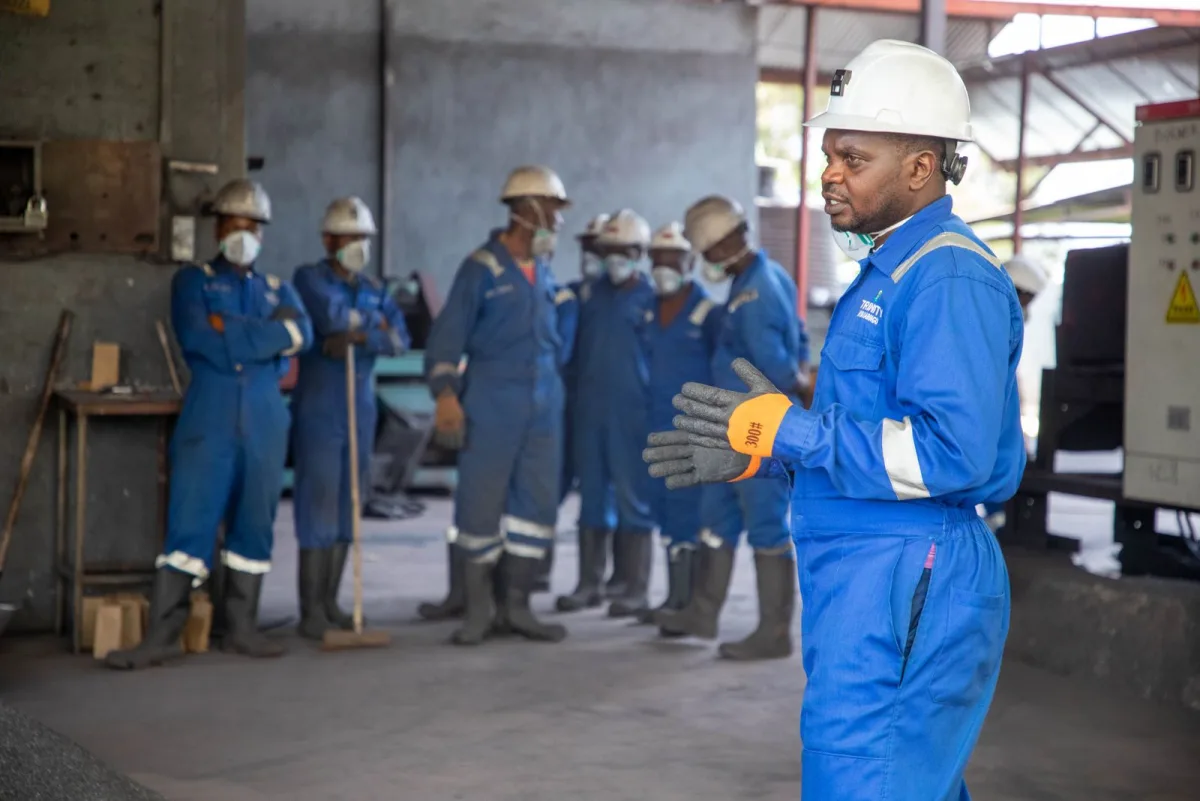
A skills gap analysis compares the technical capabilities a manufacturing team has today with the proficiency each role requires. It helps L&D, HR, maintenance, and operations leaders identify training priorities, establish role-based benchmarks, and make informed decisions about employee development, hiring, coaching, and workforce planning.
A well-run skills gap analysis can reduce unnecessary training, shorten new-hire ramp time, and focus development on the capabilities most important to reliability, production, and safety.
ITC Learning connects industrial skills assessments with targeted training and structured learning paths, helping organizations evaluate their technical workforce and turn identified gaps into practical development plans. Request a skills assessment demo for your team to discuss your workforce goals.
What Is a Skills Gap Analysis in Manufacturing?
A manufacturing skills gap analysis compares the technical knowledge and capabilities employees currently demonstrate with the requirements of their roles. The results help L&D and HR leaders identify development needs, establish training priorities, and determine whether each gap calls for training, coaching, supervised practice, hiring, or a non-training solution.
In simple terms:
Skills gap = required capability − current demonstrated knowledge or ability
The formula is straightforward, but the results are useful only when your organization clearly defines the necessary skills for each role. A maintenance technician may understand electrical theory but still need development in motor controls, industrial instrumentation, or systematic troubleshooting. A broad description such as “intermediate electrical skills” does not reveal these specific knowledge gaps.
A structured skills gap analysis gives your organization stronger evidence for training and development decisions. Instead of assigning the same coursework to every employee, L&D and HR teams can identify the most important gaps and build targeted development plans around them. Written and online assessments can measure technical knowledge, while practical demonstrations, workplace observations, and supervisor input provide additional evidence of applied competence.
Manufacturing Skills Gap Examples
Manufacturing skill requirements vary by equipment, job responsibilities, and business objectives. These examples show how L&D and HR leaders can connect an identified gap with an appropriate workforce-development response.
| Role or situation | Required capability | Possible gap | Appropriate response |
|---|---|---|---|
| Maintenance technician | Electrical troubleshooting | Weak circuit-analysis knowledge | Assign targeted electrical training |
| New automation line | PLC and instrumentation knowledge | Limited automation foundation | Build a structured learning path |
| Entry-level technician | Mechanical reasoning | Strong aptitude but little experience | Combine foundational training with supervised practice |
| Multi-site maintenance team | Consistent technical standards | Different knowledge levels across facilities | Establish shared role benchmarks |
| Experienced mechanic | Industrial electrical knowledge | Strong mechanical skills but limited electrical knowledge | Add cross-training for electro-mechanical work |
A job title or number of years in the field does not always show what an employee currently knows. Technologies change, employees work with different equipment, and two people with the same title may have very different experiences. Objective technical knowledge assessments give leaders another source of information for planning employee development, while practical demonstrations and workplace observations help evaluate applied ability.
Skills Gap Analysis vs. Training Needs Analysis
A skills gap analysis identifies the difference between employees’ current capabilities and the skills required for their roles. A training needs analysis determines which gaps training can address, which individual employees need support, and what the training program should cover. Organizations often conduct the skills gap analysis first and use the training needs analysis (TNA) to plan their response.
The terms overlap, but they answer different questions. A skills gap analysis may show that machine operators lack the necessary skills to work effectively with a new control system. The TNA examines whether they need technical instruction, clearer procedures, supervised practice, better resources, or another form of workplace support.
How Workforce Assessment Methods Differ
Each workforce assessment method provides a different type of evidence. Using the methods interchangeably can lead to incomplete conclusions about employees or job candidates.
| Method | Main question | Best use | Main limitation |
|---|---|---|---|
| Skills gap analysis | Which required capabilities are missing? | Workforce planning | Requires clear role and competency standards |
| Training needs analysis | Which gaps can training address? | Training program design | Training cannot correct every performance problem |
| Mechanical aptitude test | Can the person reason through mechanical concepts? | Career exploration and job-related screening | Does not prove technical competence |
| Technical knowledge assessment | What does the person know now? | Course placement and gap identification | Does not confirm hands-on performance |
| Practical demonstration | Can the person perform a defined task? | Applied competency evaluation | Requires equipment and a qualified evaluator |
| Self-assessment | How does the employee view their ability? | Gathering context and development interests | Confidence may not match demonstrated knowledge |
Organizations may combine several assessment methods when a decision requires different types of evidence. For example, a technical knowledge assessment can guide course placement, while a structured interview provides context about experience and a practical demonstration evaluates applied ability.
When Training Is Not the Solution
Not every performance gap results from missing technical knowledge. Before assigning employee training, L&D and HR leaders should determine whether workers have the resources and workplace support needed to perform their roles.
Possible non-training causes include:
- Unclear or outdated work procedures
- Missing tools, parts, or technical resources
- Poor equipment condition
- Insufficient staffing
- Conflicting performance expectations
- Limited access to supervisors or subject-matter experts
- Too little opportunity to apply previous training
A training needs analysis helps leaders distinguish development needs from operational barriers. Correctly identifying the cause reduces unnecessary training and directs resources toward the response most likely to address the problem.
What Manufacturing Skills Should You Assess?
Manufacturing skills assessments should measure technical knowledge tied to actual job duties. Relevant areas may include mechanical systems, electrical systems, instrumentation, automation, troubleshooting, safety, and industrial fundamentals. The assessment scope should reflect your organization’s roles, equipment, procedures, and future workforce needs.
No single assessment fits every industrial position. Machine operators, maintenance technicians, instrumentation technicians, and supervisors need different combinations and levels of technical knowledge. Define the skills required for each role before selecting assessment topics.
Core Industrial Assessment Categories
A role-based assessment may cover:
- Mechanical maintenance: Bearings, belt drives, lubrication, couplings, mechanical power transmission, and preventive maintenance
- Electrical fundamentals: Voltage, current, resistance, circuits, electrical measurements, and safe work concepts
- Motors and controls: Motor operation, control components, starters, and troubleshooting principles
- Hydraulics and pneumatics: Fluid-power principles, system components, pressure, flow, and fault identification
- Industrial instrumentation: Measurement, process variables, calibration concepts, and control devices
- PLC and automation fundamentals: Inputs, outputs, logic, control systems, and automated equipment
- Troubleshooting: Problem definition, evidence collection, logical testing, and fault isolation
- Industrial safety knowledge: Hazard recognition, safe-work principles, and employer-specific procedures
- Foundational skills: Mathematics, measurement, tools, diagrams, and technical terminology
Define Competencies by Role
Build a competency profile for each position using job descriptions, maintenance plans, standard operating procedures, equipment requirements, and input from experienced technicians. Include both current responsibilities and technical knowledge that employees may need as equipment or roles change.
Write each requirement in specific, measurable terms. “Understands maintenance” is too broad to guide an assessment. “Interprets basic electrical diagrams and identifies common control-circuit components” gives L&D and HR teams a clearer standard for selecting assessment content and planning development.
How to Conduct a Manufacturing Skills Gap Analysis
Conduct a manufacturing skills gap analysis by defining the business goal, selecting the roles involved, setting required proficiency levels, measuring current knowledge, and prioritizing the resulting gaps. The process should lead to targeted action, reassessment, and reporting rather than ending with a one-time score.
1. Define the Business Objective
Begin with the business problem or future need. Without a clear objective, the assessment may collect large amounts of data without helping leaders make a decision.
Frequent objectives include:
- Preparing technicians for new equipment
- Reducing new-hire ramp time
- Creating an internal advancement path
- Supporting succession planning
- Standardizing knowledge across facilities
- Preparing for automation
- Identifying training priorities
- Comparing current workforce skills with future needs
For example, a company installing automated production equipment may need to identify gaps in PLC fundamentals, instrumentation, motor controls, and troubleshooting. That objective should guide the competencies and employees included in the assessment.
2. Select the Roles and Employees in Scope
A focused pilot often works better than an immediate company-wide analysis. Start with one key position, department, facility, or operational goal. This approach makes it easier to refine the assessment process before expanding it.
Clarify whether the analysis supports employee development, hiring, onboarding, advancement, or several purposes. The answer may affect the assessment method, benchmark, communication plan, and way leaders use the results.
3. Identify the Required Skills
List the knowledge and competencies employees need to meet the business goal. Gather information from several sources rather than copying an old job description.
Useful sources include:
- Current job responsibilities
- Standard operating procedures
- Equipment manuals and maintenance plans
- Performance data
- Supervisor interviews
- Technician focus groups
- Future equipment and technology plans
- Internal career requirements
Limit the first analysis to the skills that influence the stated objective. Assessing every possible topic can hide the gaps that matter most.
4. Set Desired Proficiency Levels
Define what each skill level means before assessing the current workforce. A numerical score without a role benchmark does not tell leaders whether the employee meets the job requirement.
A five-level scale might include:
- Foundational awareness
- Basic working knowledge
- Independent working knowledge
- Advanced troubleshooting knowledge
- Subject-matter expertise
Organizations should define each level for the relevant competency. Level 3 in hydraulic systems may require different evidence from Level 3 in industrial electrical troubleshooting.
5. Measure Current Skills
Use more than one source when the decision carries significant consequences. Objective assessments can measure knowledge consistently, while managers, employees, performance records, and practical exercises provide useful context.
Possible methods include:
- Technical knowledge assessments
- Mechanical aptitude tests
- Employee self-assessments
- Manager evaluations
- Structured interviews
- Performance reviews
- Maintenance and quality records
- Work samples
- Practical demonstrations
Self-assessments can help reveal confidence and development interests, but they should not stand alone. Some employees underestimate their skills, while others rate themselves against a different standard.
6. Compare and Prioritize the Gaps
Calculate the difference between current and desired proficiency, then rank the results. A large gap does not always deserve priority if the employee rarely uses that skill or the skill has little connection to business goals.
Consider:
- Effect on production or reliability
- Safety relevance
- Frequency of the task
- Number of employees affected
- Future importance
- Difficulty of external hiring
- Time and resources needed for development
This step converts assessment data into workforce priorities. It also helps leaders explain why certain training needs come before others.
For example, suppose an electrical troubleshooting role requires Level 4 proficiency and a technician currently demonstrates Level 2. That creates a two-level gap. If the task is safety-critical and performed weekly, the organization may prioritize it ahead of a three-level gap in a rarely used, low-risk skill. This prevents gap size alone from determining the training plan.
7. Develop the Action Plan
Choose the response that matches the cause and size of each gap. Options may include targeted courses, structured learning paths, coaching, supervised practice, cross-training, process changes, or recruitment.
Set clear responsibilities, target dates, and measures of progress. The final step should also schedule reassessment so the organization can compare later results with the original baseline.
How to Benchmark Your Maintenance Team’s Skills
A maintenance skills benchmark defines the knowledge level required for a role, task group, or career stage. Leaders compare assessment results with that standard to identify development needs. Strong benchmarks reflect actual job requirements rather than the team average, the strongest technician’s score, or a generic industry label.
A benchmark should identify the role, competency, required proficiency, assessment method, and review date. It may also distinguish between foundational knowledge, independent working knowledge, and advanced troubleshooting knowledge.
Benchmarking Mistakes to Avoid
A benchmark loses value when different stakeholders interpret it differently. Document the standard and explain how the organization will use it before employees complete an assessment.
Watch for these mistakes:
- Applying one benchmark to every technical role
- Using self-ratings as the only source
- Treating an average score as the required standard
- Comparing new hires directly with senior specialists
- Ignoring different equipment responsibilities
- Leaving benchmarks unchanged after a process update
- Using one assessment method as the complete benchmark
Teams operating across several plants may use shared core competencies while adding site-specific requirements. This approach creates consistency without ignoring differences in equipment and operations.
Turn Assessment Results Into a Training Plan
Assessment results become useful when leaders connect each priority gap with a specific action. Small knowledge gaps may call for targeted courses, while related foundational gaps may require a structured learning path. Reassessment then shows whether knowledge increased or whether the employee needs additional training, coaching, or workplace support.
Avoid assigning every employee the same program unless the results show a shared need. Personalized assignments allow experienced technicians to focus on missing topics instead of repeating material they already know.
Match Each Finding With the Right Response
The type and cause of a gap should guide the action plan. The following framework helps leaders move from assessment data to practical decisions.
| Assessment finding | Recommended response |
|---|---|
| Narrow knowledge gap | Assign a targeted lesson or course |
| Several related foundational gaps | Build a structured learning path |
| Strong knowledge but weak application | Add coaching and supervised practice |
| Different gaps across employees | Create individual learning assignments |
| Widespread team gap | Develop a department-level program |
| Non-training performance barrier | Correct the process, resource, or supervision issue |
| Required skill unavailable internally | Consider hiring or external expertise |
| Strong aptitude but little experience | Combine foundational education with structured practice |
ITC Learning’s industrial skills course catalog covers mechanical, electrical, instrumentation, and related industrial topics. Organizations can connect identified knowledge gaps with targeted learning instead of relying on broad training assignments.
Request a skills assessment demo for your team to explore how ITC Learning can help assess technical knowledge and connect results with industrial learning paths.
How Skills Assessments Support Workforce Development
Skills assessments support workforce development by helping organizations place new hires, plan onboarding, identify advancement needs, and prepare employees for future roles. When leaders connect results with structured training and reporting, workforce development becomes an ongoing system rather than a collection of unrelated courses.
Assessment data can inform several workforce decisions:
- New-hire training placement
- Role-based onboarding
- Internal advancement
- Apprenticeship support
- Succession planning
- Cross-training
- Multi-site standardization
- Preparation for new technology
The World Economic Forum’s Future of Jobs Report 2025 says employers expect 39% of workers’ core skills to change by 2030, reinforcing the need for ongoing assessment rather than a one-time exercise.
Employees also need to know why the organization conducts assessments and how leaders will use the results. Clear communication reduces uncertainty and positions the process as a development tool. Organizations building broader pipelines can connect assessment data with their workforce development programs.
How to Choose a Manufacturing Skills Assessment Partner
A manufacturing skills assessment partner should provide relevant technical content, clear reporting, course-mapping options, flexible delivery, and support for different roles and skill levels. Buyers should also ask how the provider structures assessments, explains scores, protects assessment integrity, and supports development after identifying gaps.
Before choosing a partner, evaluate the full process rather than the test alone. A score report has limited value if managers cannot connect it with a benchmark, learning path, or next action.
Skills Assessment Partner Checklist
Ask these questions during the selection process:
- Does the assessment cover relevant industrial competencies?
- Can we assess individuals, teams, roles, and facilities?
- Can managers interpret the reports without extensive analysis?
- Can results connect with targeted courses or learning paths?
- Will the content work with our existing LMS?
- Does the provider offer a hosted platform?
- Can we track assessment scores, exams, and course completion?
- Are English and Spanish options available?
- Does the provider explain what its assessments cannot measure?
- Can we reassess employees and compare progress?
ITC Learning combines industrial skills assessments with technical course mapping, structured learning paths, reporting, and apprenticeship support, helping organizations move from identified gaps to targeted workforce development. The company reports serving more than one million learners and 6,000 organizations over more than 50 years.
Its training library includes hundreds of lessons covering mechanical, electrical, instrumentation, and related industrial skills. Organizations can use ITC’s learning platform or explore a delivery that fits an existing training environment.
For Individual Technicians: Assess Your Skilled Trades Aptitude
Employers use skills assessments to support workforce development, but individual technicians, apprenticeship candidates, students, and career-changers can also use them to identify strengths and explore possible learning paths. This test can help you better understand your current abilities and identify areas for growth, although it does not replace technical training or demonstrated workplace competence.
Skilled Trades Aptitude Tests for Hiring and Development
A skilled trades aptitude test helps measure how well you reason through concepts relevant to skilled-trades work, including mechanical principles, problem-solving, and other job-related knowledge. Employers may use these assessments to support hiring and workforce development, while individuals can use them to explore career paths and identify areas for improvement.
Aptitude differs from learned technical knowledge. You may understand mechanical principles or spatial relationships without knowing a plant’s maintenance procedures. Likewise, an experienced employee may possess strong technical knowledge because of training and work experience even if aptitude testing was never part of the hiring process.
What Does a Skilled Trades Aptitude Test Cover?
Test content differs by provider and purpose. Depending on the assessment, topics may include mechanical comprehension, tools, spatial reasoning, electrical concepts, and other job-related knowledge.
| Topic | What questions may examine |
|---|---|
| Gears and pulleys | Direction, speed, force, and mechanical advantage |
| Levers and balance | Load movement and force relationships |
| Hydraulics and pressure | Basic fluid-power principles |
| Motion and friction | How forces affect physical systems |
| Tools | Recognition and basic purpose |
| Basic electrical concepts | Circuits, current, resistance, and components |
| Spatial reasoning | Movement and relationships between parts |
Practice questions can help you become familiar with the format and review job-related concepts. However, preparation should not create the impression that one test represents every employer’s process or every skilled-trades role.
Aptitude, Knowledge, and Competence
These terms answer different questions:
- Aptitude: Do you show potential to learn and apply skilled-trades concepts?
- Knowledge: What technical concepts do you understand now?
- Competence: Can you apply the required knowledge and skills under defined workplace conditions?
Employers should match the assessment with the decision they need to make. The U.S. Equal Employment Opportunity Commission states that employment tests must be job-related and used in compliance with federal antidiscrimination laws. Employers should therefore connect assessment content and scoring directly to the position and the decision the test supports.
A sound hiring process may combine aptitude results with structured interviews, experience, technical assessments, work samples, and practical demonstrations. No single score provides a complete picture of job readiness.
Build a More Targeted Manufacturing Training Program
A strong assessment program defines required competencies, measures current knowledge, identifies priority gaps, and connects each finding with the appropriate response. ITC Learning supports this process with technical assessments, industrial training, structured learning paths, and reporting tools that help organizations determine what employees need to learn, why it matters, and how progress will be measured.
Request a skills assessment demo for your team to discuss how ITC Learning can identify technical knowledge gaps and connect them with targeted workforce development.
Why Organizations Choose ITC Learning
- 50+ years developing skilled-trades training
- 1M+ learners trained
- 160+ courses · 450+ lessons
- SCORM-compliant · Deliverable via ITC LMS or your existing platform
- Available in English + select courses in Spanish
- Supports manufacturers, industrial employers, educational institutions, workforce development programs, apprenticeships, and CTE partnerships