Electric motors drive your centrifugal pumps, conveyors, and hydraulic systems. When one fails, the line stops.
Fast motor diagnosis requires both electrical knowledge and mechanical awareness. Teams without a structured process waste hours replacing parts that aren’t the problem. A solid foundation in electrical maintenance training is what separates those teams from the ones that fix motors fast and keep them running.
What is Electric Motor Troubleshooting?
Electric motor troubleshooting is the systematic process of diagnosing and resolving electrical and mechanical faults in industrial motors.
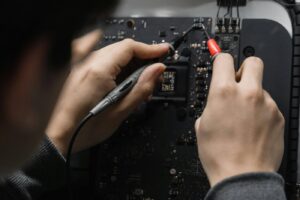
Techs use digital multimeters and megohmmeters to inspect power supply lines, motor windings, and mechanical loads to find the root cause of poor performance or total failure.
The process doesn’t stop at the motor itself. It includes the VFD drive, motor control contactors, and the physical equipment that the motor drives. The goal is to tell the difference between a burned-out winding and a tripped overload caused by a jammed conveyor.
Electric Motor Troubleshooting Tips
Here are things to know when troubleshooting electric motors:
Start at the Power Source, Not the Motor
When a motor stops, the instinct is to assume the motor is dead. That assumption wastes time.
The motor is often a victim. Upstream electrical issues or downstream mechanical binds are frequently the real cause.
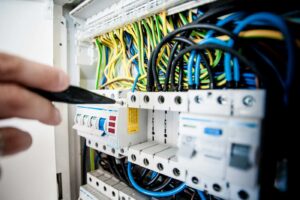
Start at the power source. Verify proper voltage at the motor control center. Check the contactor and overload relays. Then inspect the motor terminals. Skip a step, and you risk replacing a perfectly good motor when the fault was a blown fuse or a loose wire. For the full fault-isolation process, see our guide on electrical troubleshooting for industrial equipment.
Identify Electrical Failures
These are the electrical faults your team needs to spot:
- Phase imbalance and single-phasing: Lose one phase, and the motor draws excessive current on the remaining two. Windings overheat fast. For more on how this plays out, see our guide on common electrical failures in industrial equipment.
- Voltage fluctuations: Both over-voltage and under-voltage degrade motor insulation over time.
- Insulation degradation: Moisture, dust, and heat break down winding insulation. Techs use megohmmeters to test insulation resistance between windings and the motor frame.
Identify Mechanical Failures
The motor is only as reliable as the system it drives. Mechanical inspections are non-negotiable.
- Bearing failure: The most common mechanical failure in motors. Worn bearings cause vibration and heat. Eventually, the rotor contacts the stator and destroys the motor.
- Overloading: A jammed pump or overloaded conveyor forces the motor to draw locked-rotor current and trips protective devices.
- Misalignment: Improper alignment between the motor shaft and driven equipment causes severe vibration and early bearing failure.
Troubleshoot VFD-Driven Motors
VFDs add complexity to motor diagnosis. They also introduce power quality issues.
When a VFD trips on an over-current fault, your tech needs to determine if the drive is failing, the motor has a short, or the load spiked. Testing VFD output requires a multimeter capable of reading pulse-width modulated (PWM) signals accurately.
Techs also need to check VFD fault codes and understand what each one tells them. For more on contactor and control circuit diagnosis that often precedes VFD faults, see our guide on motor control troubleshooting.
Root Cause Analysis
Replace a failed motor without knowing why it failed, and the new motor suffers the same fate.
Root cause analysis is the final step of any motor troubleshooting. Uniformly scorched windings point to an overload condition. A single burned phase points to single-phasing. These failure signatures tell your team what to fix in the system, not just what to replace. For the skills needed to perform this analysis correctly, see our guide on electrical skills for maintenance technicians.
Recommended ITC Learning Courses
- AC and DC Motors: Covers motor theory and hands-on maintenance for AC and DC systems.
- Electrical/Electronic Test Equipment: Teaches safe use of multimeters, meggers, and oscilloscopes for motor fault diagnosis.
- Electrical Control Equipment: Covers VFDs, motor starters, and overload relay operation.
- Rotating Equipment Predictive Maintenance and Alignment: Teaches vibration analysis, shaft alignment, and predictive maintenance practices for rotating equipment.
Key Takeaways
- Start at the power source. Work toward the motor, not the other way around.
- Electrical and mechanical failures require different diagnostic approaches.
- Single-phasing and phase imbalances cause the most catastrophic motor winding failures.
- VFD-driven motors need specialized test equipment and fault code knowledge.
- Root cause analysis stops the same failure from repeating.
Want to build better motor diagnostic skills across your team? Contact ITC Learning to explore targeted motor training for your maintenance crew.
Frequently Asked Questions
-
What is the first step in electric motor troubleshooting?
Safety first. Secure the equipment with LOTO, then visually inspect the motor and verify supply voltage at the motor control panel with a multimeter.
-
How do techs test motor insulation?
They use a megohmmeter to apply high-voltage DC to the motor windings. A low resistance reading signals degraded insulation and an impending short circuit.
-
Why do electric motor bearings fail?
Lack of lubrication, over-lubrication, contamination from dust or moisture, and mechanical misalignment with the driven equipment are the most common causes.