A preventive maintenance checklist turns a vague goal into a repeatable technical process.
Relying on memory in a high-volume manufacturing environment is a recipe for missed inspections and surprise failures. A standardized checklist makes sure every tech on every shift covers every failure point on every asset.
For the broader PM strategy this checklist supports, see our guide on preventive maintenance for manufacturing.
What Should be in your Preventive Maintenance Checklist?
A preventive maintenance checklist is a step-by-step inspection guide for a specific piece of equipment. It covers the mechanical, electrical, and fluid power requirements of that asset.
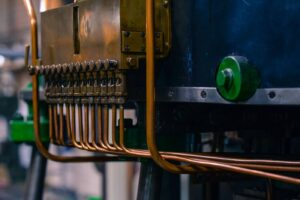
A hydraulic system checklist, for example, covers fluid level verification, leak inspection at the manifold, and heat exchanger temperature. These documents give your team the technical roadmap to catch wear early, before it becomes an emergency work order.
Mechanical Inspection Points
Mechanical components fail from friction and vibration. Your checklist needs to prioritize these areas:
- Lubrication points: Confirm grease fittings are clear and the correct lubricant reaches bearings and bushings. Over-lubrication causes as many failures as under-lubrication.
- Fasteners and mounts: Check for loose bolts on motor mounts and frame structures. Operational harmonics back these out over time and the looseness goes unnoticed until something fails.
- Drive components: Inspect belts for cracks or glazing. Check chain drives for proper tension and lubrication.
- Shaft alignment: Periodically verify alignment between coupled shafts, like those between an electric motor and a centrifugal pump. Misalignment is the single largest cause of premature bearing failure.
Electrical and Control System Checks
Electrical failures give fewer visual cues than mechanical ones. The checklist matters more here, not less.
- Terminal tightness: Thermal cycling loosens electrical connections over time. Look for discoloration or pitting on contactors.
- VFD drives and cooling: Confirm cooling fans work and cabinet filters are clean. A clogged filter causes a VFD to trip on thermal protection.
- Sensor calibration: Verify that proximity switches, photo-eyes, and ultrasonic sensors are clean and correctly positioned.
- PLC battery status: On older PLC systems, a dead backup battery causes logic loss during a power cycle. This check takes 30 seconds and prevents hours of downtime.
Fluid Power Checks
Hydraulic and pneumatic systems stop production instantly when they fail.
- Fluid condition: Record oil clarity and check for oxidation odor. Discolored or burnt-smelling fluid means the system runs too hot.
- Filter indicators: Check differential pressure gauges on hydraulic filters to determine if a change is overdue.
- Air leaks: Run ultrasonic or visual audits on pneumatic lines and cylinders. Even small leaks waste energy and drop system pressure enough to cause actuator timing issues.
How to Create Your Own Preventive Maintenance Checklist
Follow these criteria to create an effective preventive maintenance checklist:
Write Specific Pass/Fail Criteria
A checklist that only says “check motor temperature” is not a checklist. It’s a suggestion.
Your checklist needs specific parameters. For example:
- Ineffective: Check motor temperature.
- Effective: Measure motor housing temperature with an IR thermometer. Fail if temperature exceeds 180°F or sits 40°F above ambient.
That specific criterion lets a junior tech catch a bearing that runs hot and schedule a replacement before it seizes. Without it, the tech records “normal” and moves on.
For how this level of precision connects to your overall downtime numbers, see our guide on how preventive maintenance reduces equipment downtime.
Connect Checklists to Planning
A checklist defines what to inspect. Your planning process defines when it happens, who does it, and what parts need to be on hand.
These two things work together. A checklist without a plan gets skipped under production pressure. For how to build the plan around your checklists, see our guide on maintenance planning for manufacturing.
Update Checklists After Every Failure
When a failure happens that your checklist didn’t catch, add an inspection point.
Checklists should evolve based on real failure history, not just OEM recommendations. This is how your PM program gets smarter over time. For the root cause methodology that feeds this improvement loop, see our guide on the difference between preventive vs reactive maintenance and why documentation matters.
Connect to Predictive Data
As your PM program matures, condition monitoring data can replace some time-based checklist items.
Instead of checking bearing temperature every month on a calendar, a vibration sensor tells you exactly when that bearing needs attention. For how to layer predictive tools on top of your checklist program, see our guide on predictive vs preventive maintenance.
Recommended ITC Learning Courses
- Rotating Equipment Predictive Maintenance and Alignment: Teaches vibration analysis, alignment verification, and bearing life extension practices that feed directly into PM checklist tasks.
- Industrial Lubrication: Covers lubricant selection, correct application, and interval management to prevent the lubrication mistakes that cause most bearing failures.
- Electrical Control Equipment: Covers VFD maintenance, contactor inspection, and control circuit checks that belong in every electrical PM checklist.
- Industrial Hydraulic Power: Teaches fluid condition checks, filter management, and actuator inspection for hydraulic PM tasks.
Key Takeaways
- Checklists keep PM consistent across shifts and technicians.
- Every task needs a specific technical measurement, not a vague instruction.
- Checklists should update every time a failure reveals a new inspection point.
- Digital or paper documentation supports regulatory compliance and reliability audits.
Want your team to run tighter, more consistent PM inspections? Contact ITC Learning to explore training that builds real inspection skills.
Frequently Asked Questions
-
How often should you update checklists?
Every time a failure happens that the checklist didn't catch. Treat them as documents that improve with every repair, not forms that stay static.
-
Should you use generic or manufacturer-specific checklists?
Start with OEM recommendations and customize them for your environment. High-heat or high-dust conditions need more frequent filter and lubrication checks than the OEM baseline assumes.
-
Can junior technicians use these checklists?
Yes. A well-written checklist is one of the best ways to develop newer techs. It guides them through every consequential component of the machine with specific criteria.