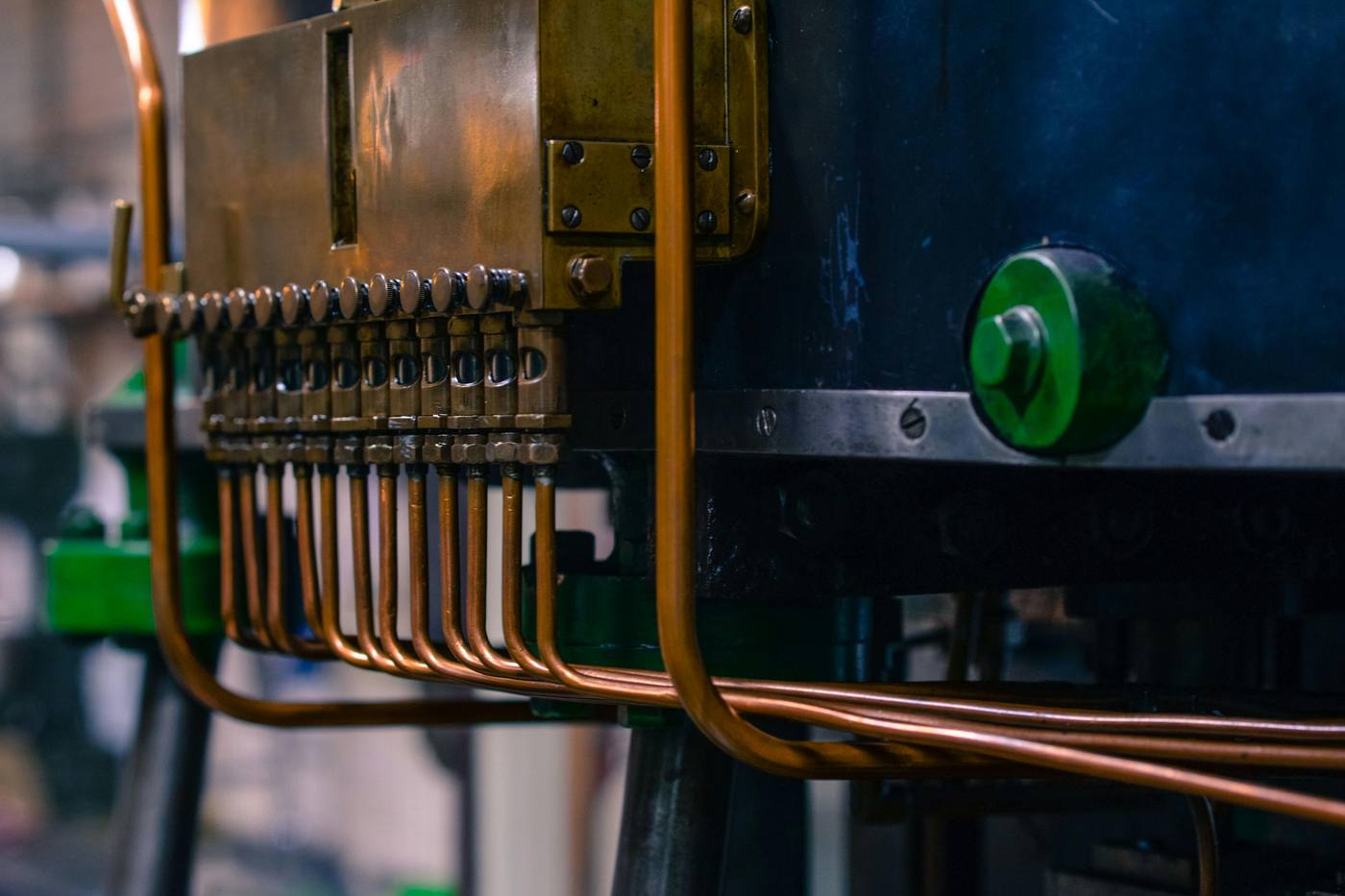
Digital controls provide the logic. Mechanical components do the work.
From massive gears in a textile mill to precision spindles in a CNC center, mechanical failures are a constant threat to productivity. Unlike electrical faults, most mechanical failures give warning signs. The key is knowing what to look for before something breaks completely.
For a systematic framework to diagnose these failures once they happen, see our industrial equipment troubleshooting guide.
Mechanical Failures in Industrial Equipment
Mechanical failures are physical breakdowns or degradations of components that move, rotate, or transmit force.
This includes centrifugal pumps, conveyors, hydraulic systems, and gearboxes. Common failure modes are fatigue, wear, corrosion, and fracture.
Diagnosis uses a sensory approach: listen for noise, feel for vibration, look for leaks or metal shavings. These signals tell you what’s failing before the component gives out completely.
Bearing and Bushing Failures
Bearings fail more often than any other mechanical component.
- Symptoms: High-pitched squealing or localized heat that stands out from neighboring components.
- Causes: 90% of bearing failures come from improper lubrication or contamination. The other 10% come from misalignment and overloading.
- Diagnostics: A thermal camera shows a bearing that runs 20 to 30 degrees hotter than its neighbor. That’s your signal to schedule a replacement before the bearing seizes and destroys the shaft. For a breakdown of how to make that repair decision using a structured process, see our guide on the industrial equipment troubleshooting process.
Gearbox and Transmission Failures
Gearboxes translate motor speed into torque. When they fail, production often stops completely.
- Gear tooth wear: Caused by pitting or scuffing from metal-on-metal contact. This usually means the lubricant level is low or the wrong lubricant type was used.
- Seal leaks: When the oil leaks out, the gearbox overheats and seizes in minutes.
- Backlash: Excessive gear play causes poor precision in automated systems and accelerates tooth wear.
Oil analysis is the best early warning tool for gearboxes. High levels of iron or brass in the oil mean active gear or bushing wear, often weeks before a visible failure.
Hydraulic and Pneumatic Actuator Failures
Mechanical failure in fluid power systems centers on seals and rods.
- Cylinder bypass: Worn internal seals let fluid leak past the piston. The cylinder creeps or loses force without warning.
- Rod scoring: Dirt on the rod gets pulled into the seal on retraction. That creates a permanent leak path that no seal replacement fully fixes until the rod gets replaced, too.
For the broader contamination causes that accelerate these seal failures, see our guide on troubleshooting industrial control systems for context on how control system signals mask these mechanical issues.
How to Prevent Mechanical Failures
Three practices prevent most premature mechanical failures:
- Precision alignment: Use laser alignment tools for motors and pumps. Misalignment is the single largest cause of early bearing failure.
- Vibration monitoring: A vibration pen or sensor detects a bad bearing weeks before it fails. That gives you time to schedule the repair instead of reacting to a breakdown.
- Lubrication management: The right grease, at the right interval, in the right amount. Over-lubrication causes as many failures as under-lubrication.
When a mechanical failure does happen, don’t skip the investigation. Find out whether the part failed from normal wear or from an abuse condition. For that process, see our guide on root cause analysis for equipment failures.
Related reading: Causes of industrial equipment failures
Recommended ITC Learning Courses
- Bearings — Reducing Failure Rate: Covers bearing failure analysis, proper installation, and maintenance practices to extend bearing life.
- Industrial Hydraulic Power: Teaches hydraulic system operation, seal and actuator diagnostics, and pressure-related failure identification.
- Rotating Equipment Predictive Maintenance and Alignment: Covers shaft alignment, vibration analysis, and predictive maintenance practices for rotating machinery.
- Centrifugal Pump Repair: Covers pump principles, cavitation diagnosis, and disassembly and reassembly procedures.
- Industrial Lubrication: Teaches lubricant selection, correct application intervals, and the lubrication mistakes that cause most bearing failures.
Key Takeaways
- Mechanical failures almost always give audible or thermal warning signs before they become breakdowns.
- Lubrication is the single biggest factor in mechanical component life.
- Precision alignment and correct tensioning prevent a large share of premature failures.
- Root cause analysis tells you whether a part failed due to normal wear or an avoidable condition.
Want to reduce mechanical failures and extend equipment life? Contact ITC Learning to explore mechanical maintenance training for your plant.
Frequently Asked Questions
-
Why do drive belts keep snapping?
Usually, drive belts keep snapping because of improper tension (too tight) or sheave misalignment. When the pulleys aren't perfectly parallel, the belt walks, creates uneven heat, and fails early.
-
What is cavitation in a pump?
Cavitation in a pump is a mechanical failure where air bubbles collapse inside the pump and create tiny implosions that eat away at the metal impeller. It sounds like the pump is moving gravel.
-
How do you detect early gearbox failure?
To detect early gearbox failure, run regular oil analysis. High levels of iron or brass particles in the oil mean active gear or bushing wear, often weeks before the gearbox shows external symptoms.